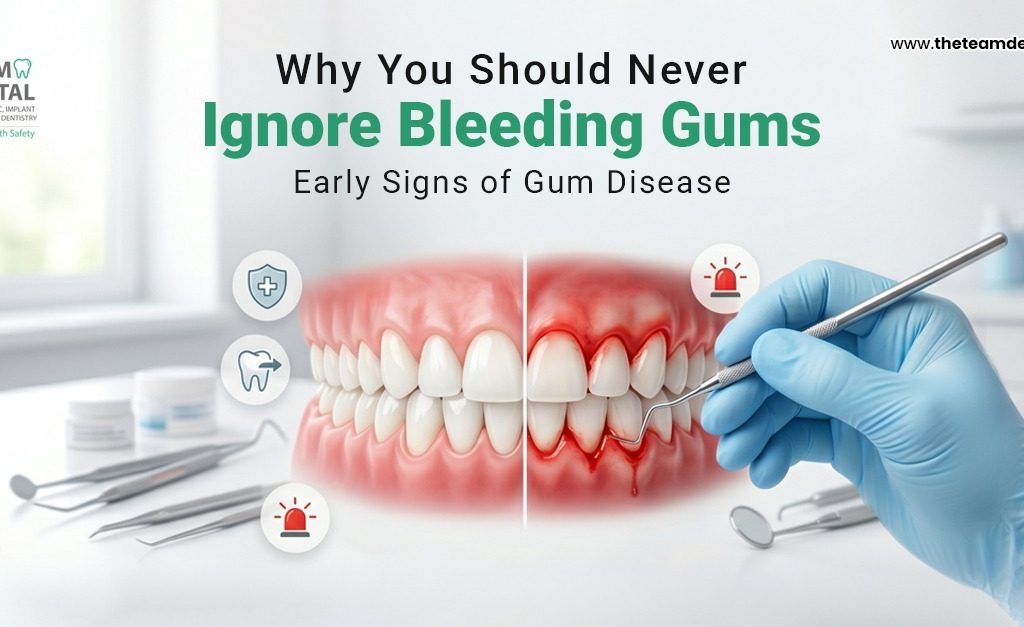
That “small” bleeding while brushing might be your gums sending a serious warning signal.
Introduction
Most people notice a little blood while brushing or flossing and brush it off as “normal.” But bleeding gums are not normal—they are often the earliest sign of gum disease, also known as gingivitis. Ignoring it can allow a mild issue to silently progress into a serious oral health condition that may even affect your teeth and overall health.
What Causes Bleeding Gums?
Bleeding gums usually happen when plaque builds up along the gum line. Plaque is a sticky layer of bacteria that irritates the gums, causing inflammation and sensitivity.
Common causes include:
Poor brushing or flossing habits
Plaque and tartar buildup
Vitamin deficiencies (especially Vitamin C)
Smoking or tobacco use
Hormonal changes
Certain medications
Early Signs of Gum Disease
Bleeding is just the beginning. Watch out for:
Red, swollen, or tender gums
Bad breath that doesn’t go away
Gum recession (teeth looking longer)
Sensitivity while eating or brushing
Mild discomfort around the gums
What Happens If You Ignore It?
Untreated gingivitis can progress into periodontitis, a severe gum infection that can:
Damage the bone supporting your teeth
Lead to loose teeth
Cause tooth loss
Increase risk of other health issues like diabetes and heart disease
How to Prevent and Treat It
The good news—early gum disease is reversible.
You can prevent and manage it by:
Brushing twice daily with proper technique
Flossing daily to remove hidden plaque
Using an antibacterial mouthwash
Regular dental cleanings
Eating a balanced, vitamin-rich diet
Quitting smoking
Bleeding gums are not something to ignore or normalize. They are your mouth’s first warning sign that something needs attention. Early care can save you from pain, expensive treatments, and long-term damage.
If you notice consistent bleeding, it’s best to visit your dentist before it progresses further.