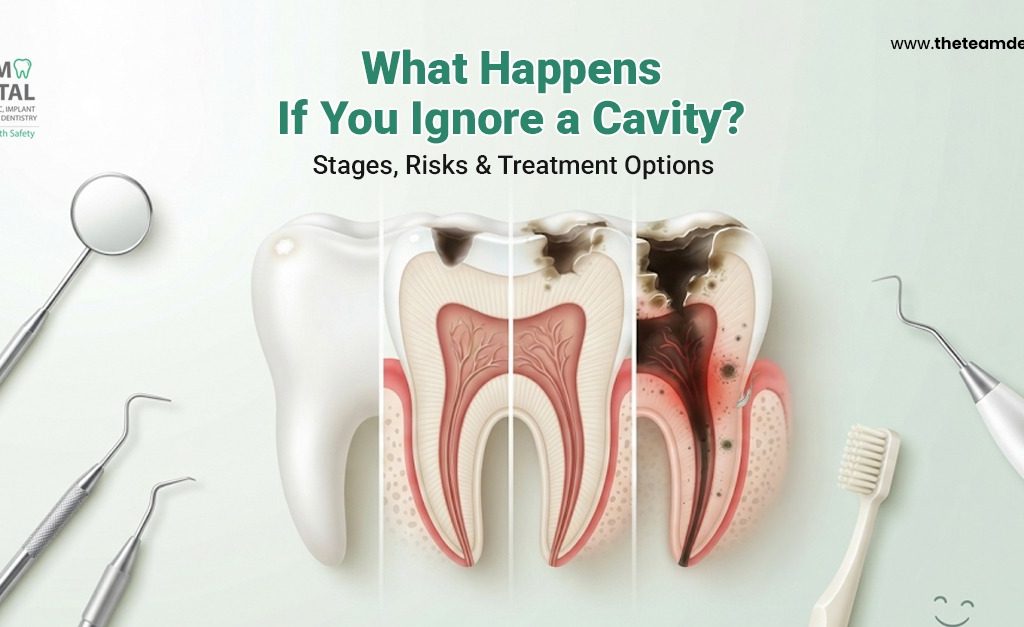
A small cavity may not hurt, so it can be tempting to ignore it. But tooth decay does not usually go away on its own. Without treatment, a cavity can gradually become deeper and more difficult to treat.
🦷 How Does a Cavity Develop?
Tooth decay usually progresses in stages:
1. Enamel Damage
Bacteria produce acids that weaken the protective enamel. At this stage, you may not feel any pain.
2. Dentin Decay
Once decay reaches the dentin beneath the enamel, you may experience sensitivity to hot, cold, or sweet foods.
3. Pulp Infection
If decay reaches the inner pulp of the tooth, it can cause severe pain and inflammation. A root canal may be required to save the tooth.
4. Abscess
An untreated infection can spread beyond the tooth and cause swelling, pus, or an abscess.
⚠️ Signs You Shouldn’t Ignore
See a dentist if you notice:
Tooth sensitivity
A visible dark spot or hole
Food getting stuck in one area
Persistent toothache
Swelling around the tooth
Pain while chewing
🦷 How Are Cavities Treated?
Treatment depends on how advanced the decay is.
Early decay: Fluoride and preventive care may help in some cases.
Cavity: A dental filling can restore the damaged tooth.
Deep decay: Root canal treatment may be needed.
Severely damaged tooth: Extraction may sometimes be necessary.
The earlier a cavity is diagnosed, the simpler treatment is likely to be.
🪥 How Can You Prevent Cavities?
Brush twice a day with fluoride toothpaste, clean between your teeth, limit frequent sugary snacks and drinks, and maintain regular dental check-ups.
🦷 When to Visit a Dentist in Pune
Don’t wait for a cavity to start hurting before getting it checked. Regular dental examinations can identify decay early and help prevent more extensive treatment.
If you suspect you have a cavity, The Team Dental, Pune can examine the tooth and recommend the appropriate treatment.
A small cavity is easier to treat than a painful dental emergency.