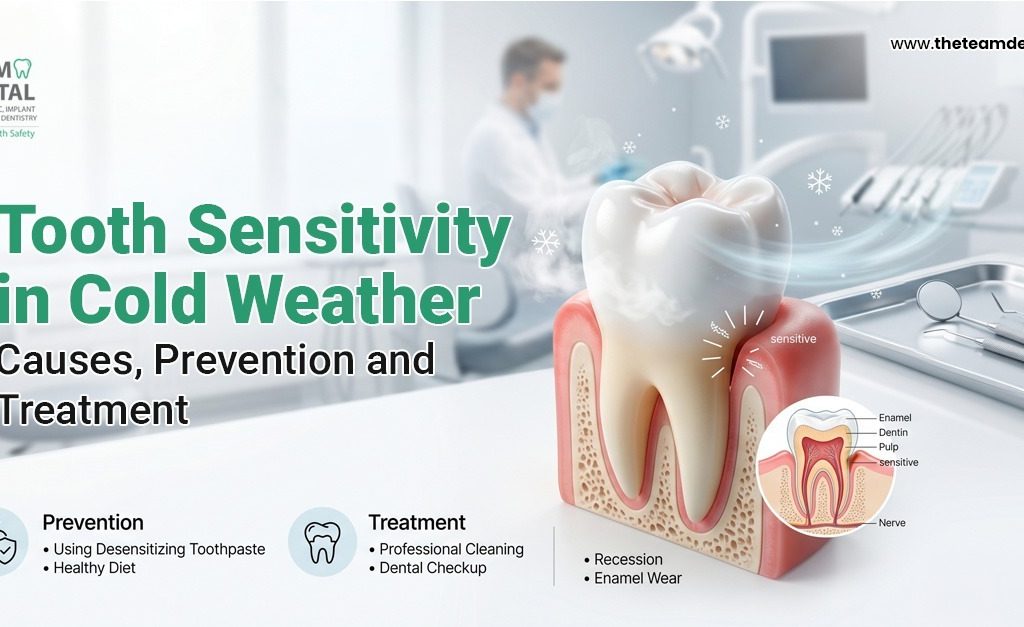
That sharp pain when you sip cold water or breathe in winter air isn’t normal—it’s tooth sensitivity trying to tell you something.
Introduction
Ever felt a sudden sharp pain in your teeth during cold weather or while eating ice cream? That’s tooth sensitivity. It happens when the protective layers of your teeth wear down, exposing the inner nerve endings. In winter, this discomfort often becomes more noticeable and harder to ignore.
Why Cold Weather Triggers Tooth Sensitivity
Cold temperatures can intensify sensitivity because exposed dentin reacts quickly to temperature changes. When enamel is weakened or gums recede, external stimuli directly affect the nerves inside the tooth.
Common reasons include:
Enamel erosion
Gum recession exposing tooth roots
Cracked or chipped teeth
Over-brushing with hard bristles
Acidic food and drink consumption
Symptoms of Tooth Sensitivity
You may notice:
Sharp pain while eating or drinking something cold/hot
Discomfort when breathing cold air
Pain while brushing teeth
Sudden short-lasting tooth pain
How to Prevent Tooth Sensitivity
Small daily changes can make a big difference:
Use a soft-bristled toothbrush
Brush gently (avoid harsh scrubbing)
Switch to a desensitizing toothpaste
Limit acidic foods and drinks
Maintain proper oral hygiene routine
Avoid teeth grinding (bruxism)
Treatment Options
If sensitivity persists, dental treatments can help:
Fluoride application to strengthen enamel
Dental bonding for exposed roots
Gum treatment for recession
Filling or crown for damaged teeth
Night guards for teeth grinding
Tooth sensitivity in cold weather is not just seasonal discomfort—it often signals underlying dental issues. Early care can prevent it from becoming a long-term problem.
If sensitivity is frequent or worsening, a dental checkup is the best way to find the root cause and treat it effectively.