
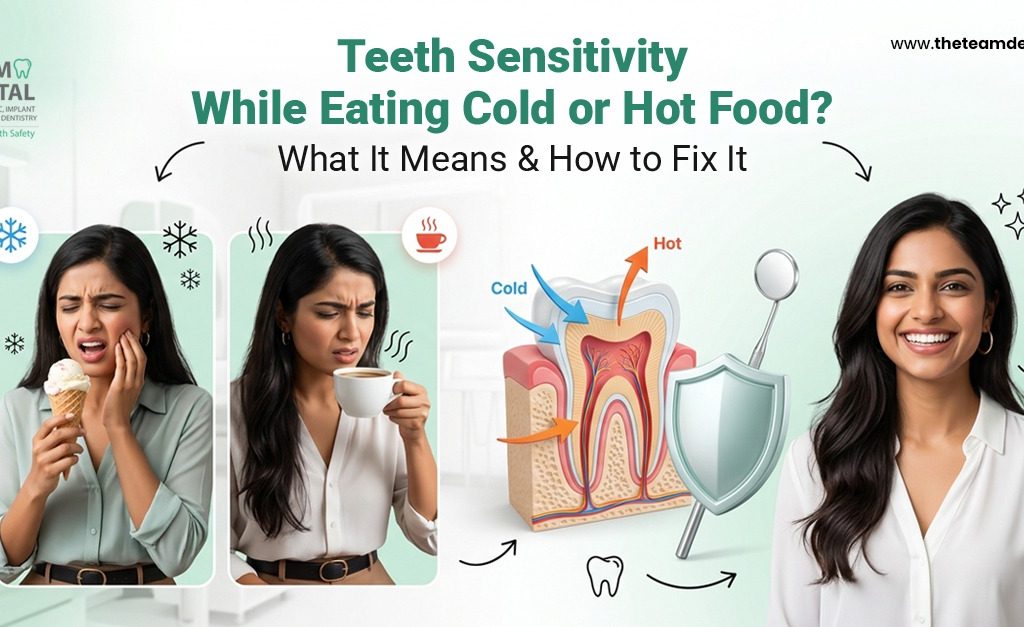
Teeth Sensitivity While Eating Cold or Hot Food? What It Means & How to Fix It
Teeth sensitivity is a sharp, sudden pain that occurs when you eat or drink something cold, hot, sweet, or even sour. It may last for a few seconds, but it can become very uncomfortable if it happens frequently.
If you feel a “zing” in your teeth while enjoying ice cream, tea, or spicy food, your teeth are likely trying to signal an underlying issue.
🦷 What Causes Tooth Sensitivity?
Tooth sensitivity happens when the protective layers of the tooth (enamel or gum coverage) are compromised, exposing the inner layer called dentin. Dentin contains tiny channels that connect to the nerve, which react to temperature and pressure changes.
🧠 Common Causes of Sensitive Teeth
1. Enamel Erosion
Enamel protects your teeth. When it wears down due to acidic food, aggressive brushing, or grinding, sensitivity increases.
2. Gum Recession
When gums pull back, the root of the tooth becomes exposed. Unlike enamel, roots are more sensitive to temperature changes.
3. Tooth Decay or Cavities
Early cavities can cause sharp sensitivity, especially when eating sweet or cold foods.
4. Teeth Grinding (Bruxism)
Clenching or grinding teeth, often during sleep, can wear down enamel and increase sensitivity.
5. Whitening Products or Treatments
Overuse of whitening toothpaste or recent whitening procedures can temporarily increase sensitivity.
⚠️ When Sensitivity Should Not Be Ignored
You should visit a dentist if:
Pain lasts more than a few seconds
Sensitivity is increasing over time
Pain occurs even without triggers
One specific tooth is more sensitive than others
You also notice swelling or decay
These signs may indicate deeper dental issues.
🪥 How to Reduce Teeth Sensitivity
🦷 Use a Soft Toothbrush
Avoid hard brushing. Gentle brushing protects enamel and gums.
🪥 Switch to Sensitive Toothpaste
Toothpaste designed for sensitivity helps block nerve pathways over time.
🧼 Avoid Acidic Foods
Limit soda, citrus fruits, and very spicy foods if sensitivity is high.
🦷 Maintain Proper Oral Hygiene
Brushing twice daily and flossing helps prevent plaque buildup that worsens sensitivity.
😴 Address Grinding Habits
If you grind your teeth, a night guard may be recommended.
🦷 Professional Treatment Options
If sensitivity persists, a dentist may recommend:
Fluoride treatment to strengthen enamel
Dental bonding for exposed roots
Filling cavities causing sensitivity
Gum treatment for recession
Bite correction in case of grinding
🏥 Sensitivity Treatment in Pune
If you are in Pune and experiencing ongoing tooth sensitivity, early diagnosis can prevent it from turning into cavities or gum problems. A simple dental check-up can identify the exact cause and provide targeted treatment.
Teeth sensitivity is common, but it is not something to ignore. It usually indicates enamel wear, gum issues, or early decay. With proper care and timely treatment, it can be fully controlled and often reversed.
If cold or hot food is causing discomfort regularly, your teeth may need professional attention sooner rather than later.