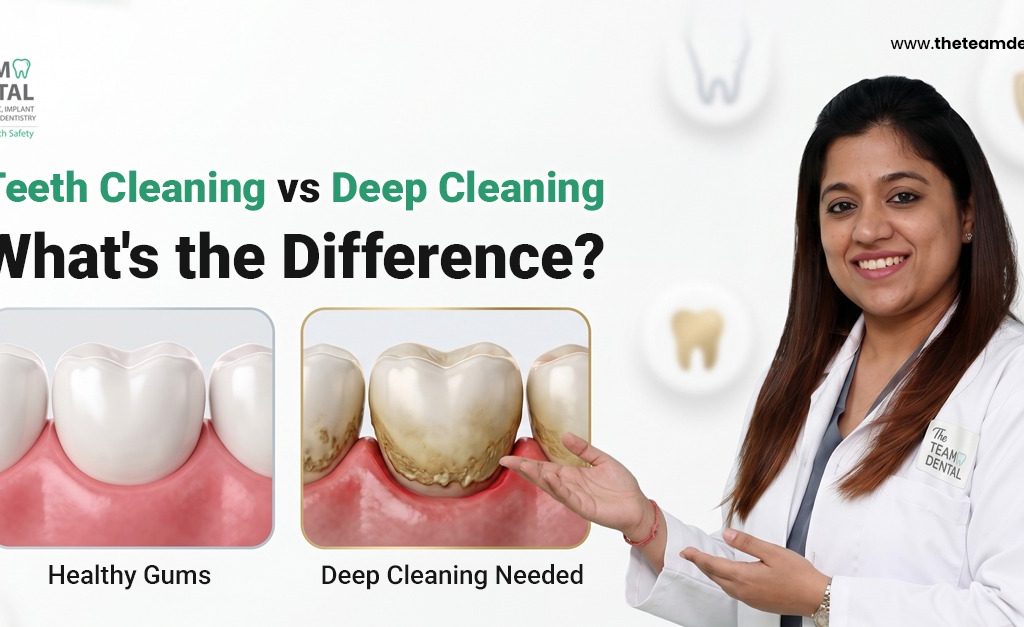
Many people assume that teeth cleaning and deep cleaning are the same procedure, but they serve different purposes. Understanding the difference can help you choose the right treatment for your oral health needs.
What Is Regular Teeth Cleaning?
A routine teeth cleaning is a preventive dental procedure that removes plaque, tartar, and surface stains from your teeth. It is typically recommended every six months to maintain healthy teeth and gums.
Benefits of Regular Teeth Cleaning
Removes plaque and tartar buildup
Helps prevent cavities
Freshens breath
Keeps gums healthy
Supports overall oral hygiene
What Is Deep Cleaning?
Deep cleaning, also known as dental scaling and root planing, is recommended when signs of gum disease are present. The procedure cleans below the gum line to remove bacteria, plaque, and tartar from the tooth roots.
When Is Deep Cleaning Needed?
Your dentist may recommend deep cleaning if you experience:
Bleeding gums
Swollen or tender gums
Persistent bad breath
Gum recession
Early signs of periodontal disease
Key Difference Between the Two
Regular teeth cleaning focuses on maintaining oral health and preventing problems. Deep cleaning teeth is a treatment procedure used to manage gum disease and stop it from progressing.
Which One Do You Need?
If your teeth and gums are healthy, a routine dental cleaning is usually sufficient. However, if there are signs of gum disease, your dentist may recommend dental scaling and root planing to restore gum health and prevent further damage.
Regular dental check-ups can help determine the most appropriate treatment for your smile.