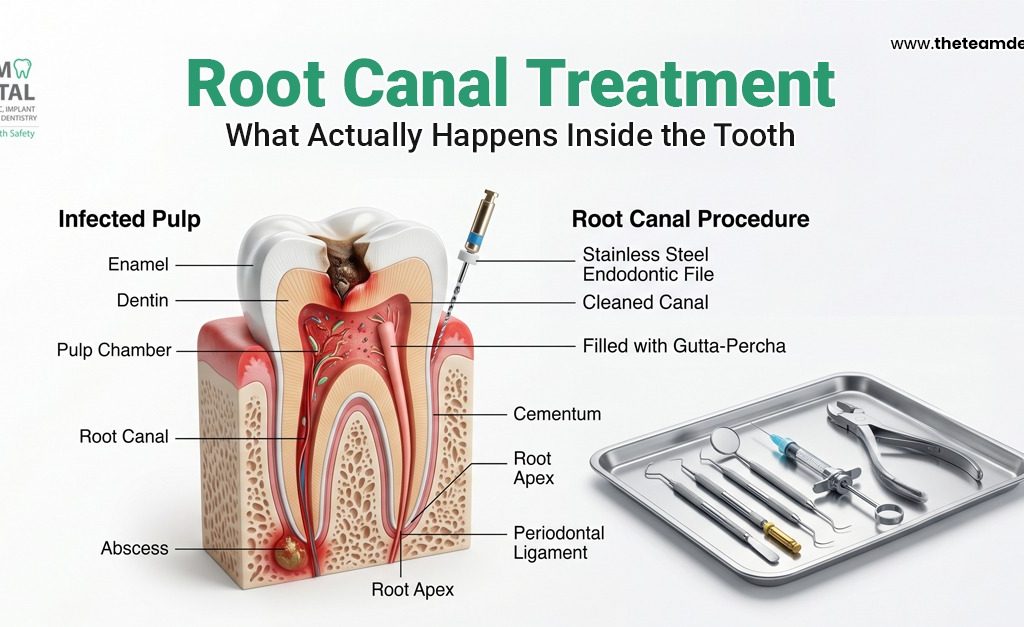
It sounds scary—but a root canal is actually a pain-relief procedure, not a pain-causing one.
Introduction
“Root canal” is one of the most misunderstood dental treatments. Many people assume it is extremely painful, but in reality, it is performed to stop pain caused by infection or deep decay. When the inner part of a tooth gets infected, a root canal helps save the tooth instead of removing it.
Why a Root Canal Is Needed
Inside every tooth is a soft tissue called the pulp, which contains nerves and blood vessels. When this pulp becomes infected or damaged, it leads to severe discomfort.
Common reasons include:
Deep tooth decay
Cracked or broken tooth
Repeated dental procedures on the same tooth
Injury or trauma to the tooth
Signs You Might Need a Root Canal
Watch out for:
Persistent tooth pain
Sensitivity to hot or cold that lingers
Swollen or tender gums
Darkening of the tooth
Pain while chewing or biting
What Actually Happens During the Procedure
A root canal is done step-by-step to clean and save the tooth:
Examination & X-ray
The dentist checks the extent of infection.
Local Anesthesia
The area is numbed so the procedure is painless.
Removing Infected Pulp
The infected tissue inside the tooth is carefully removed.
Cleaning & Disinfection
The inner canals are cleaned to eliminate bacteria.
Filling the Tooth
The empty space is sealed with a special material.
Restoration (Crown Placement)
A crown is often placed to strengthen and protect the tooth.
Is Root Canal Painful?
No. With modern techniques and anesthesia, a root canal feels similar to getting a normal filling. In fact, it relieves the pain caused by infection.
Benefits of Root Canal Treatment
Saves your natural tooth
Prevents spread of infection
Restores normal chewing ability
Maintains natural smile alignment
Long-lasting results with proper care
A root canal is not something to fear—it’s a tooth-saving treatment that removes infection and restores comfort. Delaying it can lead to more pain and even tooth loss.
If you experience persistent tooth pain, early treatment is always the safest choice.