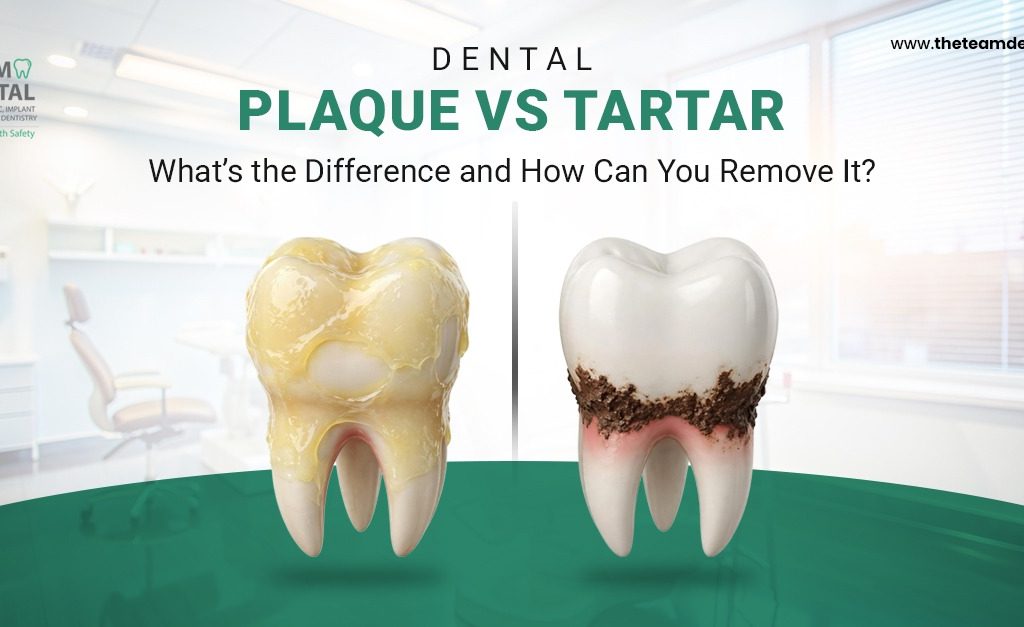
Plaque and tartar are two common dental problems, but they are not the same. While plaque can often be managed with good brushing and flossing, tartar requires professional dental cleaning.
Understanding the difference can help you protect your teeth and gums from cavities and gum disease.
🦷 What Is Dental Plaque?
Plaque is a sticky layer of bacteria that constantly forms on your teeth. It develops when bacteria in your mouth mix with food particles and saliva.
If plaque is not removed regularly, it can lead to:
Cavities
Bad breath
Red or bleeding gums
Gum disease
Brushing twice a day and cleaning between your teeth can help control plaque buildup.
🦷 What Is Tartar?
When plaque stays on your teeth for too long, it can harden and become tartar, also called dental calculus.
Tartar is harder and cannot be completely removed with a toothbrush at home. It commonly builds up around the gumline and can contribute to gum inflammation.
⚠️ Plaque vs Tartar: What’s the Difference?
Plaque: Soft, sticky, and can be removed with regular brushing and flossing.
Tartar: Hardened plaque that usually requires professional dental cleaning.
Trying to scrape tartar off yourself can damage your teeth or gums, so professional cleaning is the safer option.
🪥 How Can You Prevent Plaque and Tartar?
You can reduce buildup by:
Brushing twice a day with fluoride toothpaste
Flossing or cleaning between your teeth daily
Limiting sugary snacks and drinks
Drinking enough water
Visiting your dentist for regular check-ups and cleaning
🦷 When to Visit a Dentist in Pune
If you notice hard deposits on your teeth, bleeding gums, persistent bad breath, or visible yellow or brown buildup, it may be time for a professional dental cleaning.
At The Team Dental, Pune, a dental examination can help identify plaque, tartar, and early gum problems and recommend the right care for your smile.
Healthy teeth start with clean teeth — don’t wait for tartar to become a bigger problem.