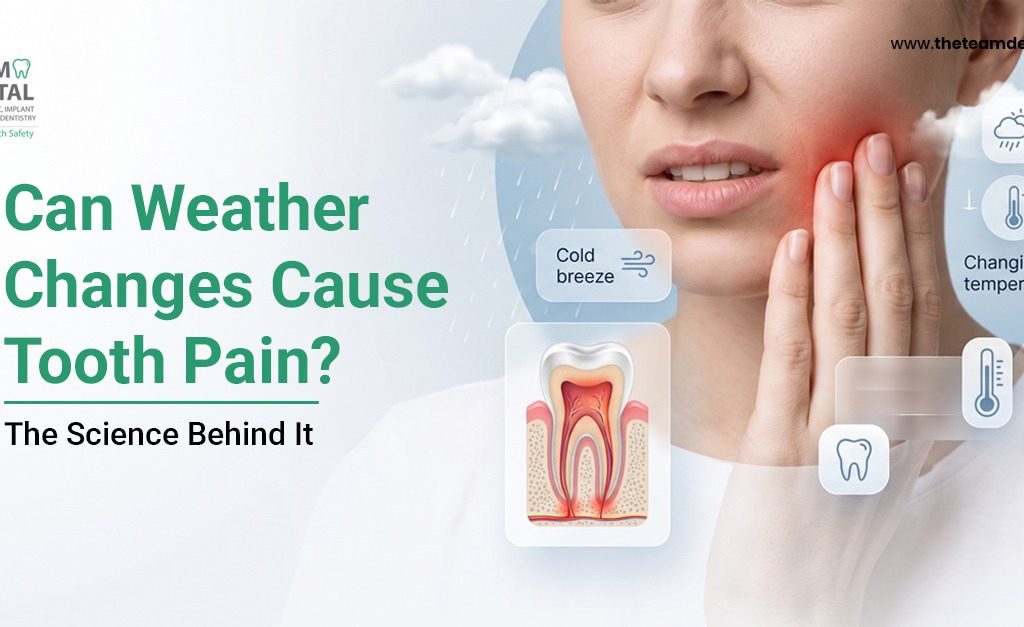
Can Weather Changes Cause Tooth Pain? The Science Behind It
SEO Meta Title: Can Weather Changes Cause Tooth Pain? The Science Behind It
Meta Description: Wondering why your teeth hurt when the weather changes? Learn how rain, humidity, and pressure fluctuations can affect dental discomfort and sensitivity.
Primary Keywords: weather-related tooth pain, toothache in rainy season
Have you ever noticed your teeth aching just before it rains or during a sudden weather change? While it may sound surprising, weather-related tooth pain is a real experience for many people.
Changes in temperature, humidity, and atmospheric pressure can make existing dental problems feel more noticeable, especially during the rainy season.
How Does Weather Affect Your Teeth?
Changes in Air Pressure
A drop in atmospheric pressure before or during rainfall can affect teeth with cavities, cracks, fillings, or infections. These pressure changes may increase discomfort and trigger tooth pain.
Temperature Sensitivity
Cold weather and sudden temperature shifts can cause teeth to expand and contract slightly. If your enamel is worn down or your tooth roots are exposed, this can lead to increased sensitivity.
Existing Dental Issues Become More Noticeable
Weather doesn’t cause dental problems, but it can make underlying conditions more painful. Common causes include:
Tooth decay
Cracked teeth
Gum recession
Worn enamel
Dental infections
Signs That Tooth Pain Needs Attention
Pain that lasts beyond weather changes
Sensitivity to hot or cold foods
Swollen or bleeding gums
Sharp pain while chewing
Persistent toothache
How to Reduce Weather-Related Tooth Pain
Use Toothpaste for Sensitive Teeth
Desensitizing toothpaste can help reduce discomfort caused by temperature changes.
Maintain Good Oral Hygiene
Regular brushing, flossing, and professional cleanings help prevent issues that contribute to sensitivity.
Schedule a Dental Check-Up
If you frequently experience toothache in the rainy season, it may indicate an underlying dental problem that requires treatment.